


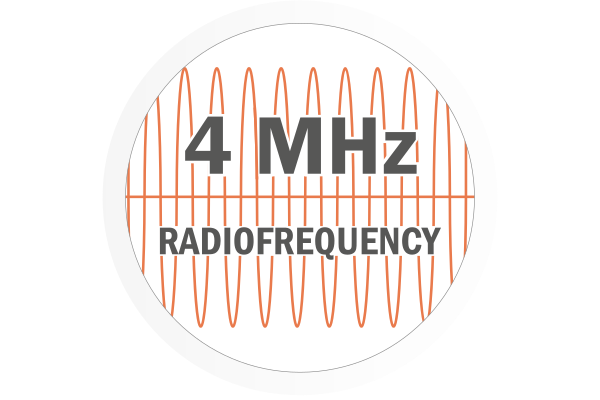




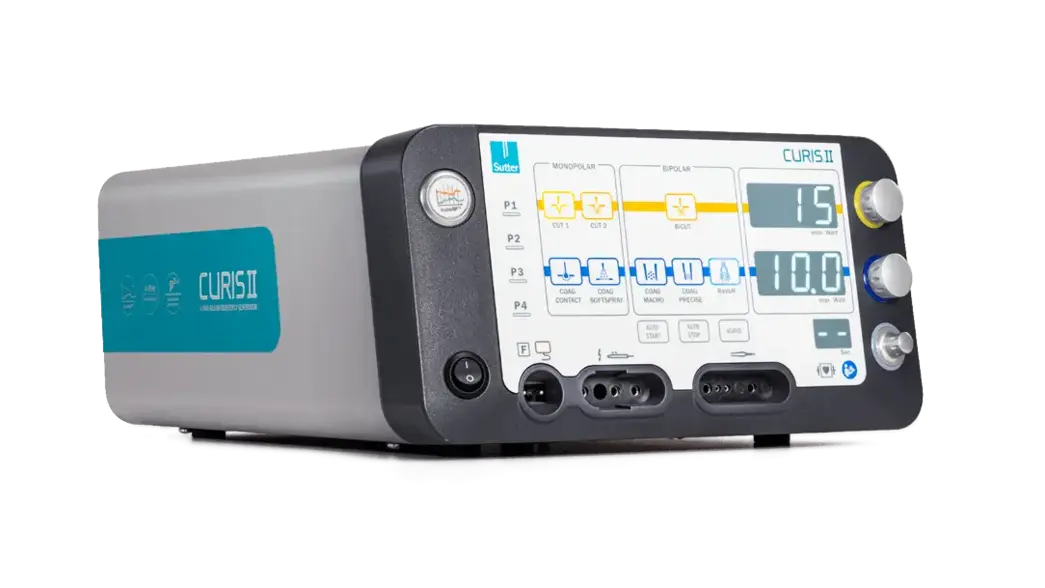
CURIS® II 4 MHz Radiofrequency
Generator
- Impedance-controlled 4 MHz radiofrequency technology for many areas of application
- AutoRF™ automatically adjusts energy output to tissue impedance, supporting reproducible results
- p³™ technology delivers radiofrequency energy in small packets (approx. 50 per second)
One device. Many applications.
Advanced 4 MHz Technology in a Compact System
The CURIS® II radiofrequency generator combines impedance-controlled 4 MHz technology, AutoRF™, p³™ technology, and important safety features such as the neutral electrode indicator. These advanced features make it a particularly reliable and versatile generator for everyday surgical use.
Highlights CURIS® II 4 MHz Radiofrequency Generator
AutoRF™
The AutoRF™ feature is a key control feature of the CURIS® II. It responds to tissue impedance in all modes and adjusts power output to match tissue resistance. AutoRF™ regulates energy output individually, switching off when necessary or increasing it to the selected maximum, to support reproducible surgical results when cutting or coagulating.

p³™ Technology
p³™ (pulsed power performance) is effective in selected modes of the CURIS® II radiofrequency generator. The pulsed power output enables precise control of energy delivery. Short pauses between pulses support targeted coagulation while minimizing thermal spread, allowing for controlled and efficient tissue treatment.
Neutral Electrode Indicator
Improved safety indicator for correct placement of the patient electrode. The neutral electrode indicator features an advanced safety mechanism that is essential for verifying the correct placement of the patient electrode. This enhanced safety feature provides continuous real-time feedback during the procedure to ensure that the electrode is positioned correctly.
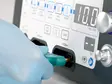
Instrument Recognition System
Automatic presetting for mode and power. The instrument recognition system is a key feature that optimizes surgical procedures by automatically adjusting both the mode and power parameters based on the recognized instrument. This intelligent system ensures that every Sutter instrument enabled for recognition is optimally configured.
Designed to Work Together
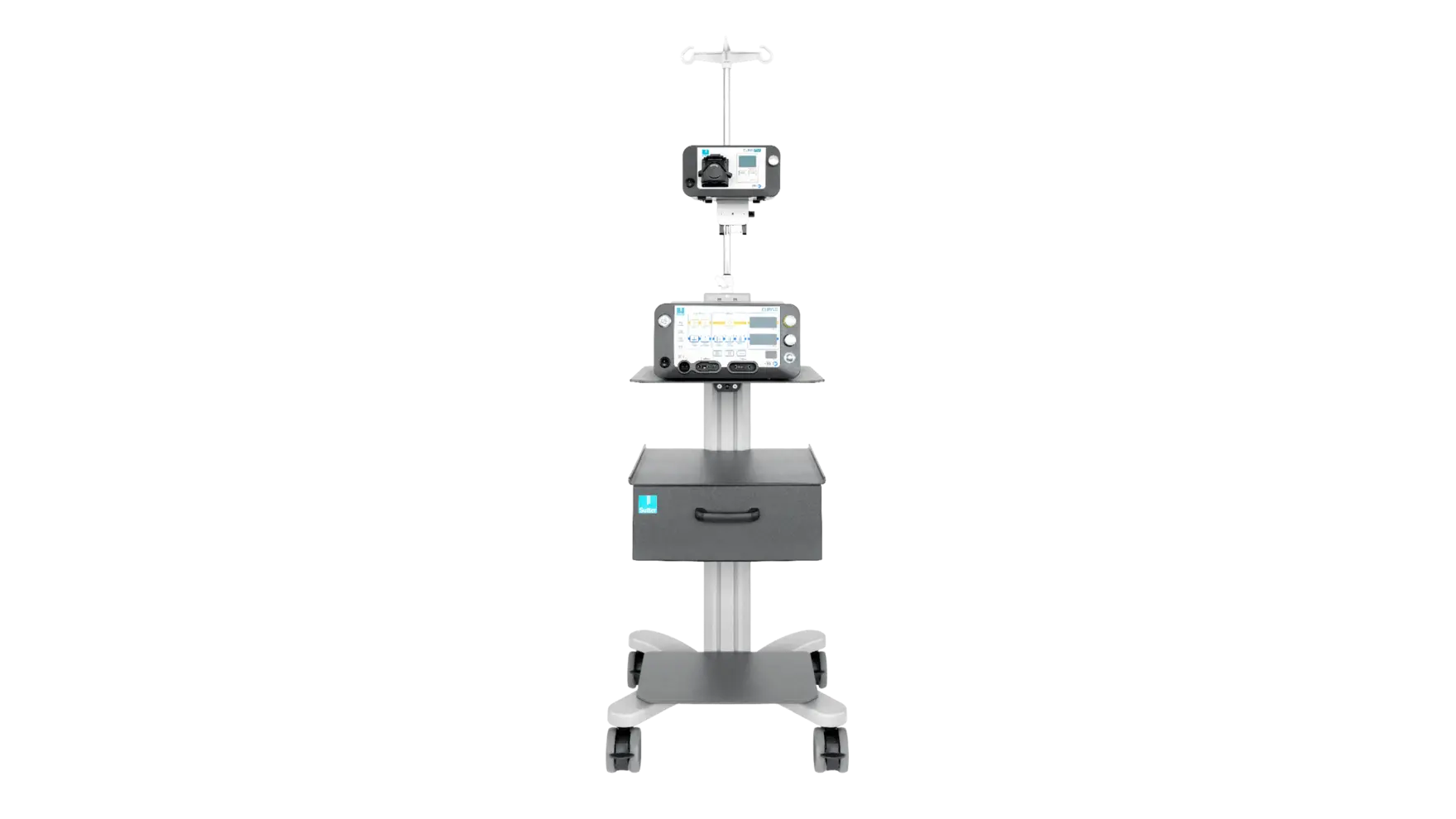
CURIS® flow Irrigation Pump
CURIS® II 4 MHz Radiofrequency Generator
CURIS® Cart
Mounting option for CURIS® and CURIS® II generators, featuring a practical storage drawer. Available as a pre-assembled version or as a space-saving self-assembly option.
Optional IV Pole for the CURIS® Cart
CURIS® II 4 MHz Radiofrequency Generator & Accessories
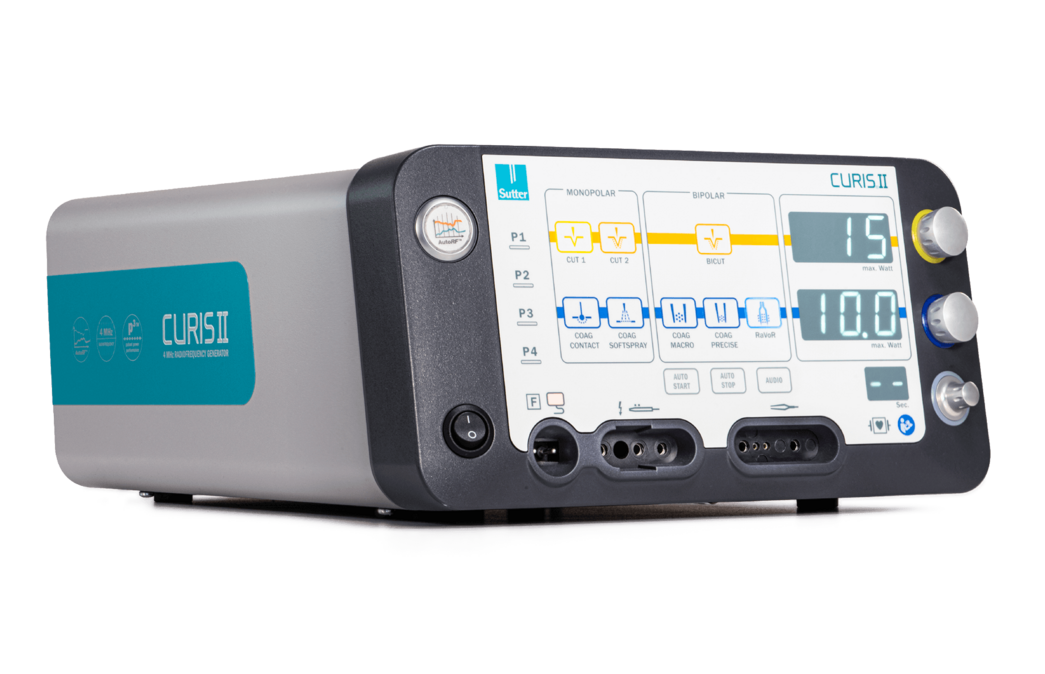
CURIS® II 4 MHz Radiofrequency Generator (including power cord, operating instructions, and test report)
REF 36 01 00 - 05
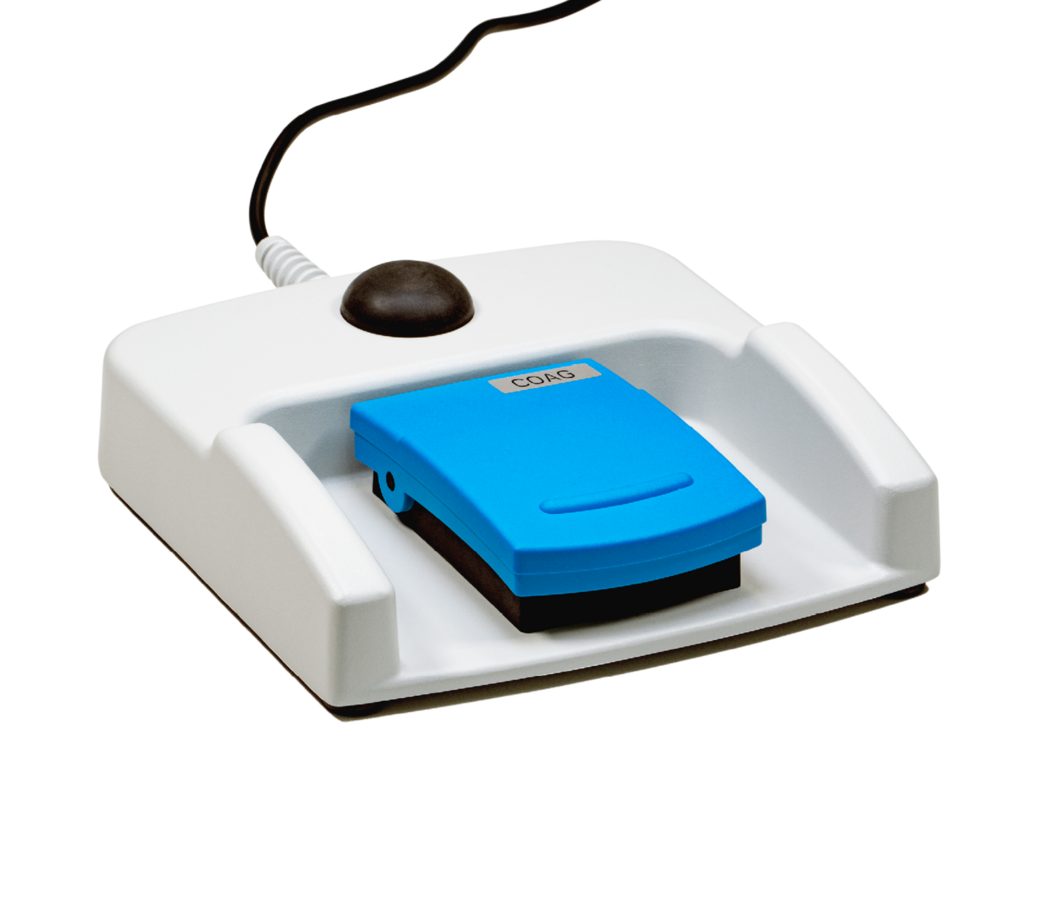
Single-Pedal Foot Switch with Flush Button (coagulation only)
REF 36 01 08
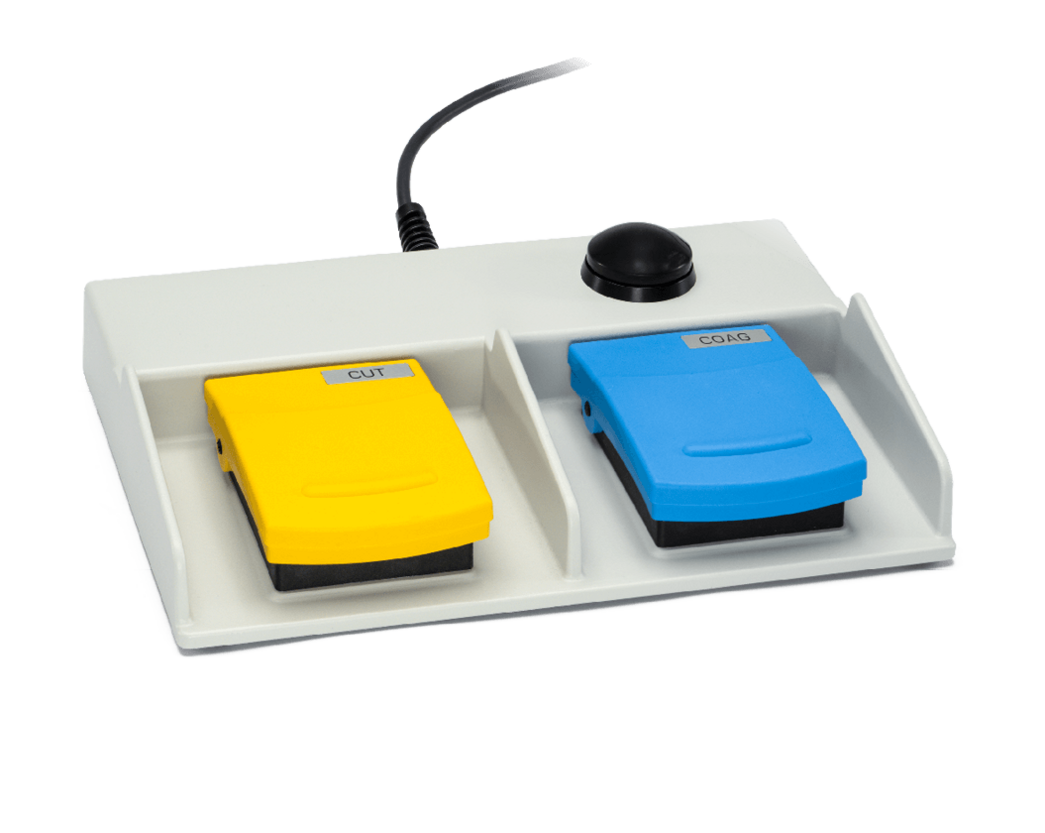
Two-Pedal Foot Switch with Flush Button (cutting & coagulation)
REF 36 01 12
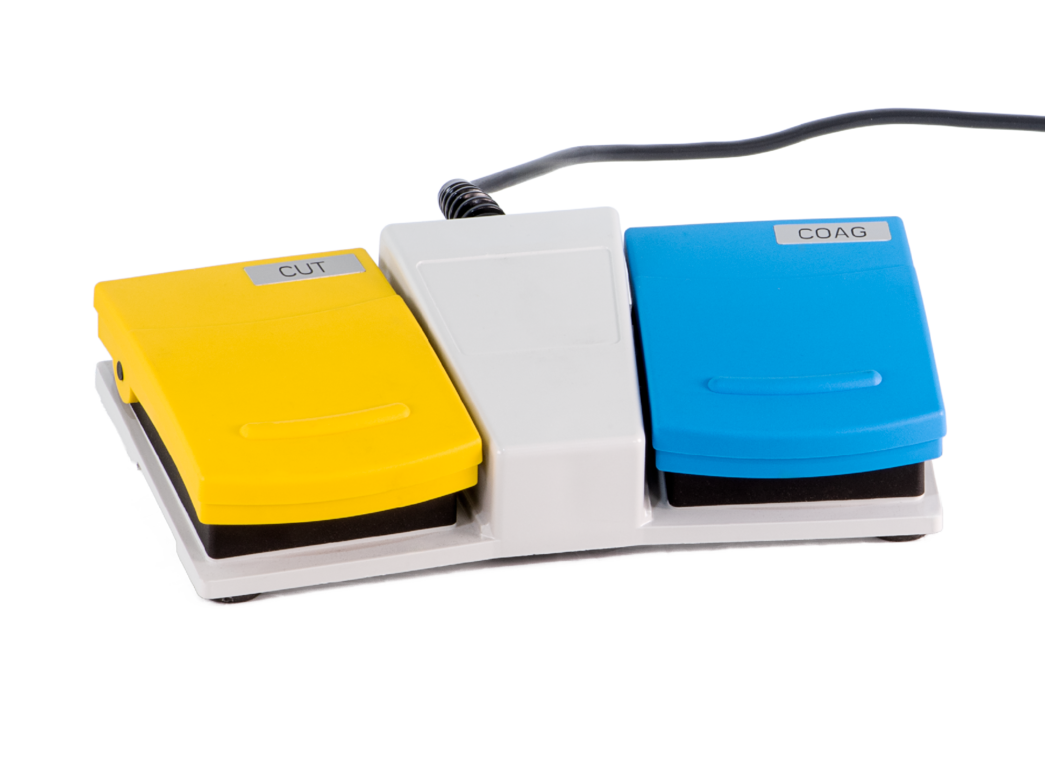
Two-Pedal Foot Switch (cutting & coagulation)
REF 36 01 14
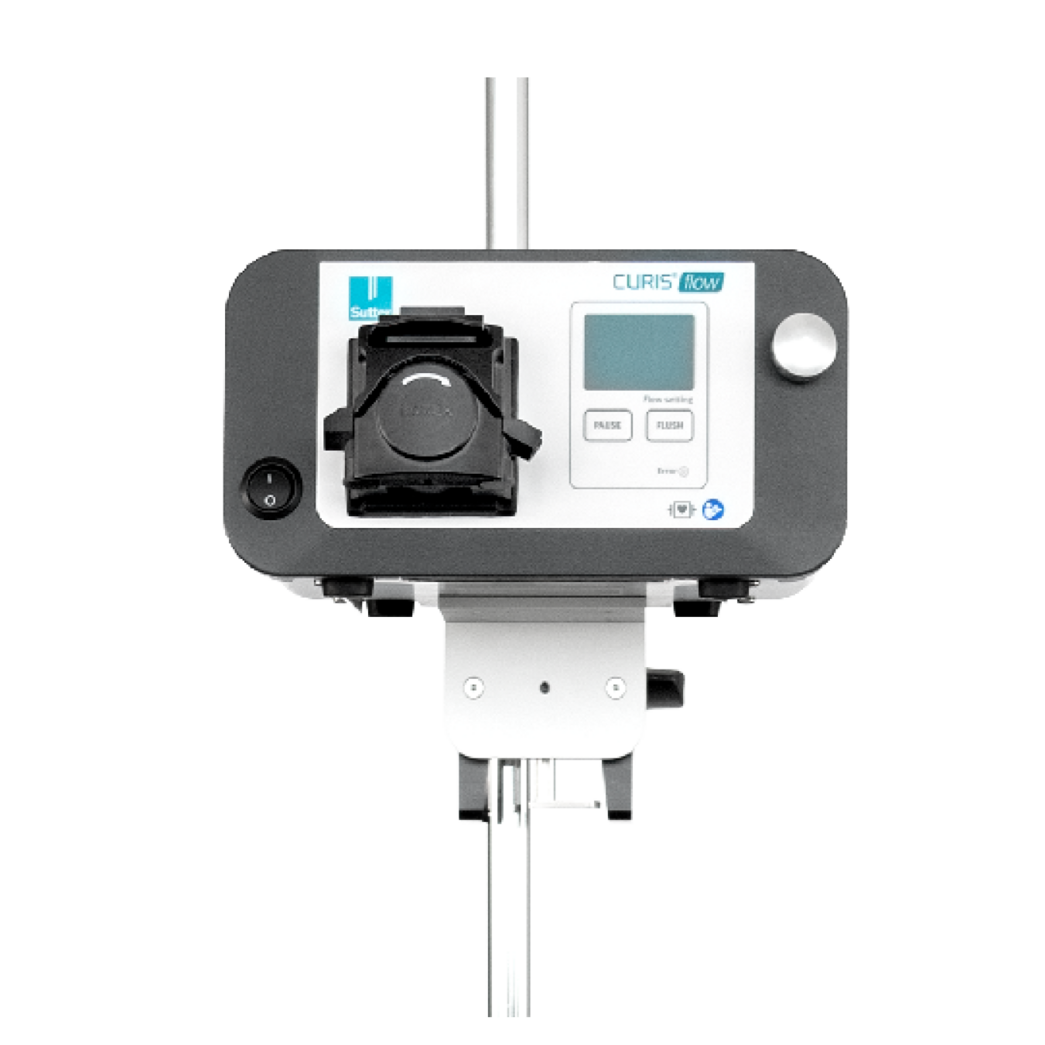
CURIS® flow Irrigation Pump (including mounting bracket for attachment to the IV pole and connecting cable)
REF 35 09 50
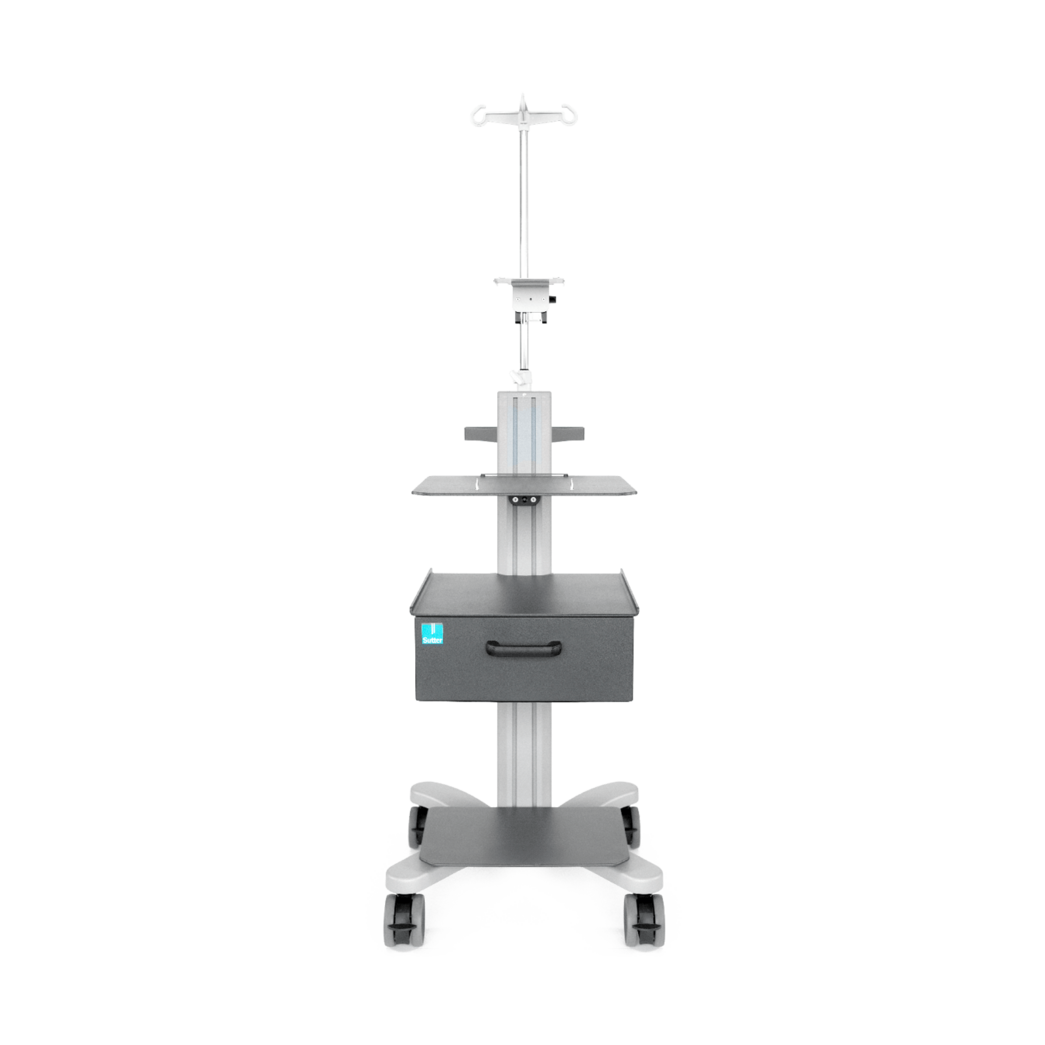
CURIS® Cart (including storage drawer and mounting kit for CURIS® and CURIS® II generators)
REF 36 09 02 - 01
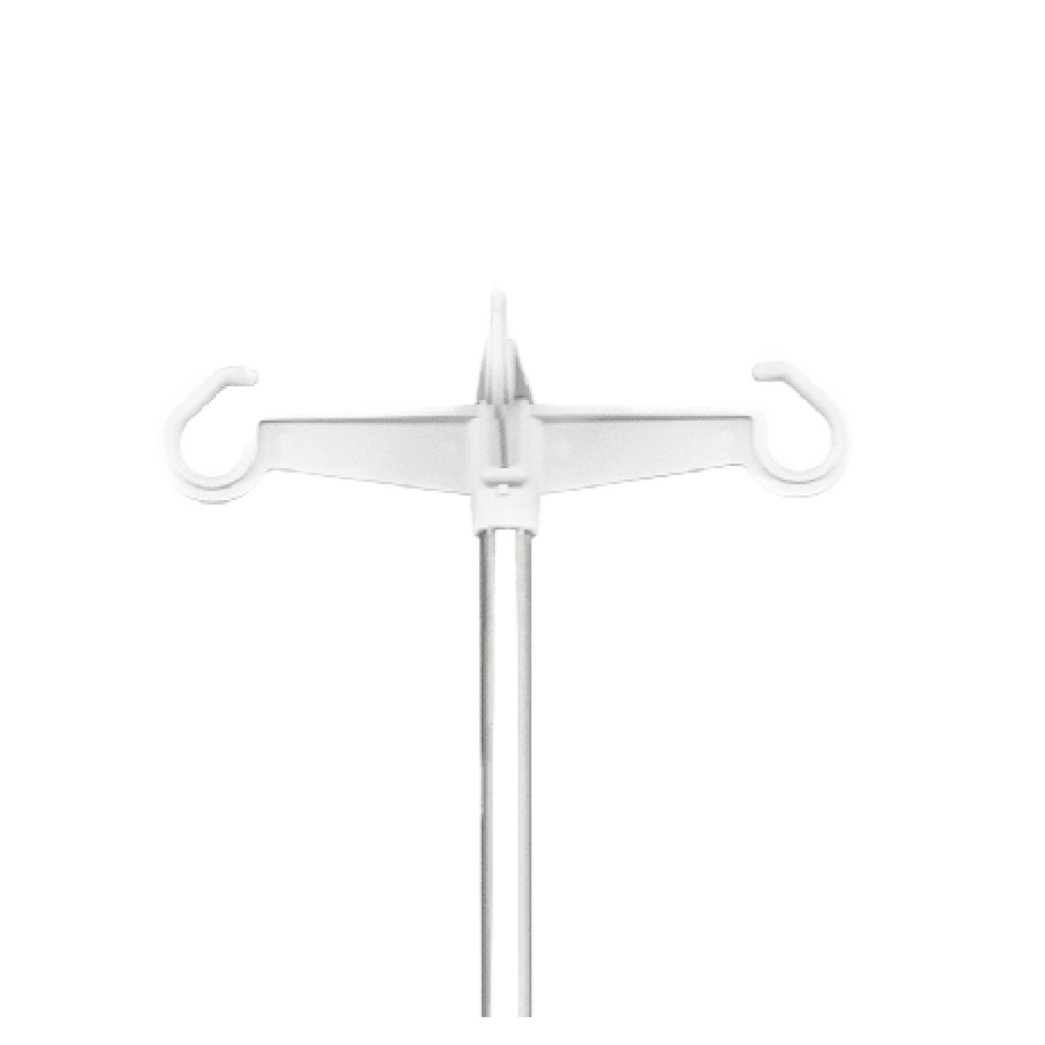
Optional IV Pole for the CURIS® Cart
REF 36 09 03
Precision that convinces

“The Sutter RF generator has meaningfully improved my surgical workflow by virtually eliminating char buildup, which keeps the operative field cleaner and reduces the need for repeated instrument cleaning. The precision of its cauterization is noticeably superior, delivering consistent, controlled coagulation that gives me greater confidence during delicate procedures. It has become an indispensable tool in my practice.”
CURIS® II 4MHz Radiofrequency Generator. Engineered for Precision.
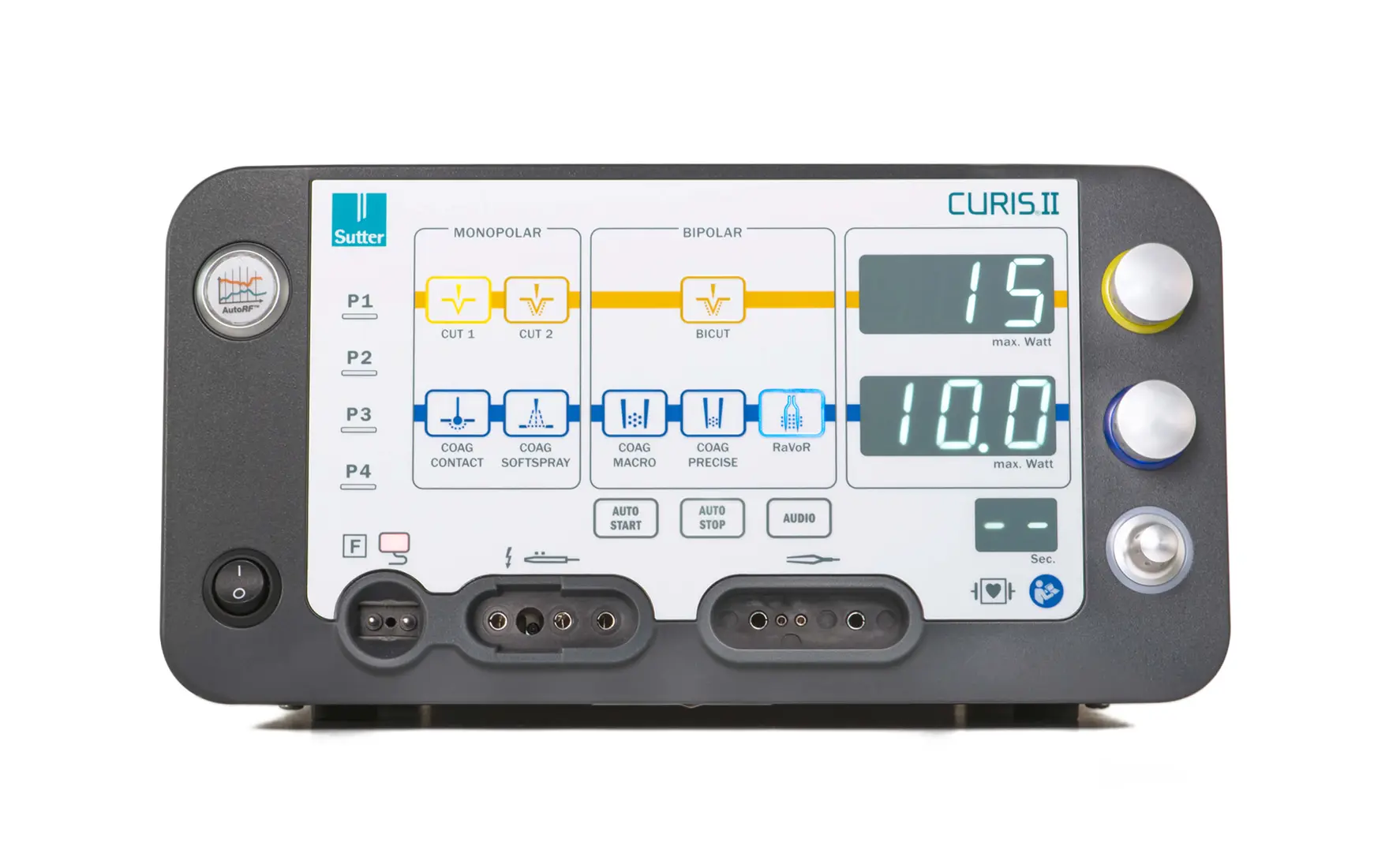
AutoRF™
The AutoRF™ function responds to tissue impedance in all modes and adjusts power output to match tissue resistance.
Neutral Electrode Indicator
The neutral electrode indicator features an advanced safety mechanism that verifies the correct placement of the patient electrode. This enhanced safety feature provides continuous real-time feedback during the procedure, helping ensure proper positioning.
Instrument Recognition System
The instrument recognition system optimizes surgical workflows by automatically adjusting mode and power settings to the detected instrument. This ensures that every recognition-enabled Sutter instrument is configured appropriately.
Save Preset Programs
The CURIS® II radiofrequency generator allows users to save preset programs for recurring procedures. Preferred settings can be recalled at the touch of a button, enabling efficient and standardized workflows.
Precise Rotary Controls
The precise rotary controls allow parameters to be adjusted quickly and easily. This helps maintain focus on the procedure while enabling smooth and efficient operation.
The Benefits of Impedance-Controlled 4 MHz Radiofrequency Technology
With 4 MHz radiofrequency technology, energy is absorbed evenly within the cells. This helps prevent the outer cell membrane from heating up, as can occur with conventional high-frequency technology. The uniform distribution of energy within the cells makes the CURIS® 4 MHz Radiofrequency Generator an effective tool for precision electrosurgery, both for cutting and coagulation.
Conventional High Frequency Technology
The electromagnetic field is concentrated between the cells and acts on them from the outside. (Illustration)
Figure 1a
CURIS® 4 MHz Radiofrequency Generator
With the CURIS® 4 MHz Radiofrequency Generator, the cell membranes are crossed and energy is distributed homogeneously within the cell interior. The result is a highly focused effect on the tissue. (Illustration)
Figure 1b
Frequently asked questions – CURIS® II Radiofrequency Generator
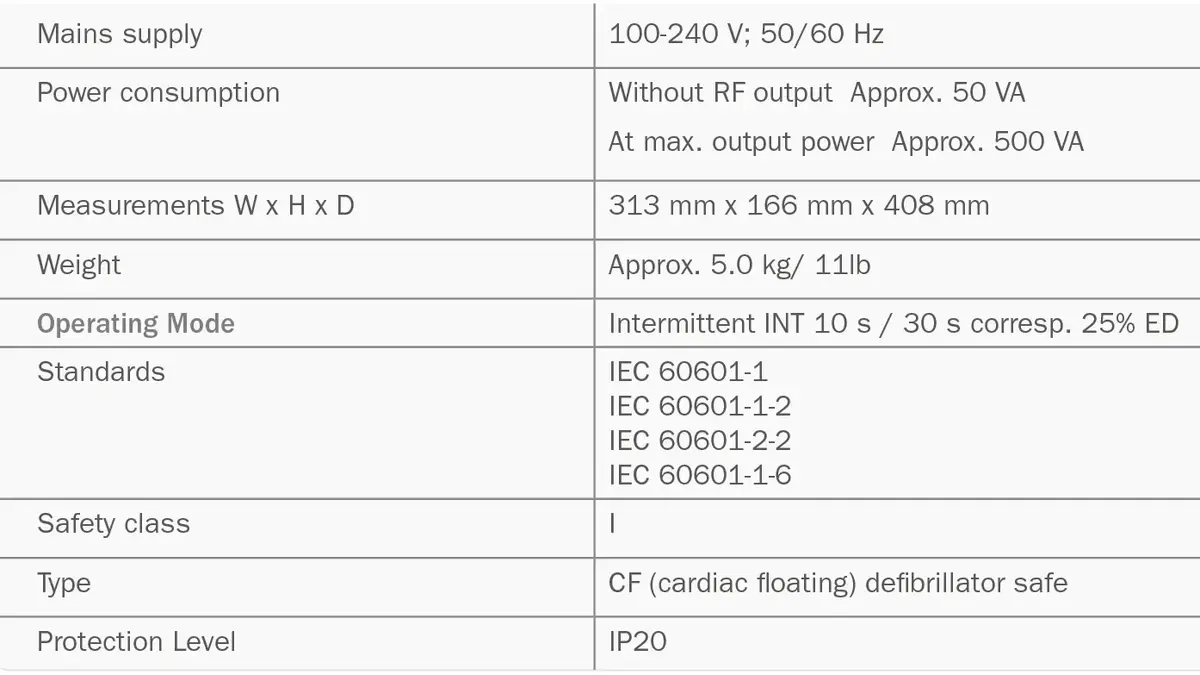
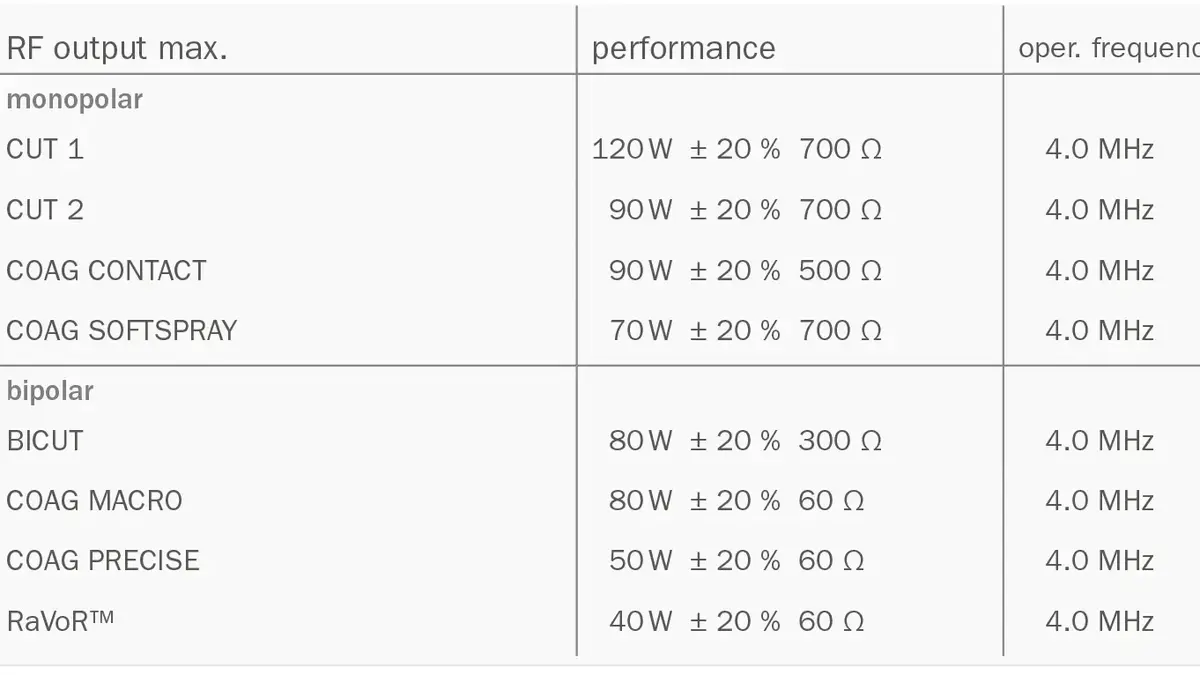
The generator operates at a fixed operating frequency of 4.0 MHz. Impedance-controlled 4 MHz radio frequency technology directs the energy specifically into the tissue, which supports even distribution and reduced thermal impact on surrounding structures.
AutoRF™ automatically adjusts power output to tissue impedance, ensuring reproducible, safe results during cutting and coagulation. The system continuously monitors impedance and regulates the CURIS® output power via two microprocessors for stable and safe application.
p3TM (pulsed power performance) works with all coagulation modes of the CURIS® 4 MHz radiofrequency generator. The pulsed power output helps to precisely control the energy supply. Thanks to short pauses between pulses, targeted coagulation with minimized thermal spread can be supported.
The CURIS® II radiofrequency generator features neutral electrode monitoring, among other things. This continuously checks the correct placement and current distribution of the neutral electrode during use. It provides early warning of irregularities, thereby increasing patient safety.
The system automatically recognizes compatible Sutter instruments and immediately provides the appropriate modes and power parameters, ensuring that optimal default settings are available without manual intervention. This intelligent automation makes the device particularly easy and efficient to use in the operating room.
The CURIS® II comes with a power cord, user manual, and test report. Additional accessories can be purchased separately as needed.
Yes, a wide range of compatible accessories is available, including bipolar forceps, monopolar electrodes, and various foot switches. Optional extensions such as the CURIS® flow irrigation pump and the CURIS® Cart are also available.
Product Information
Catalog
Instructions for Use
Contact

Sutter Medical Technologies USA
Product availability is subject to regulatory requirements in individual markets and may therefore vary.